
5 Tips for Using Cooking as a Way to Bond with Your Kids (Plus, An Energizing Pancake Recipe)3/29/2017 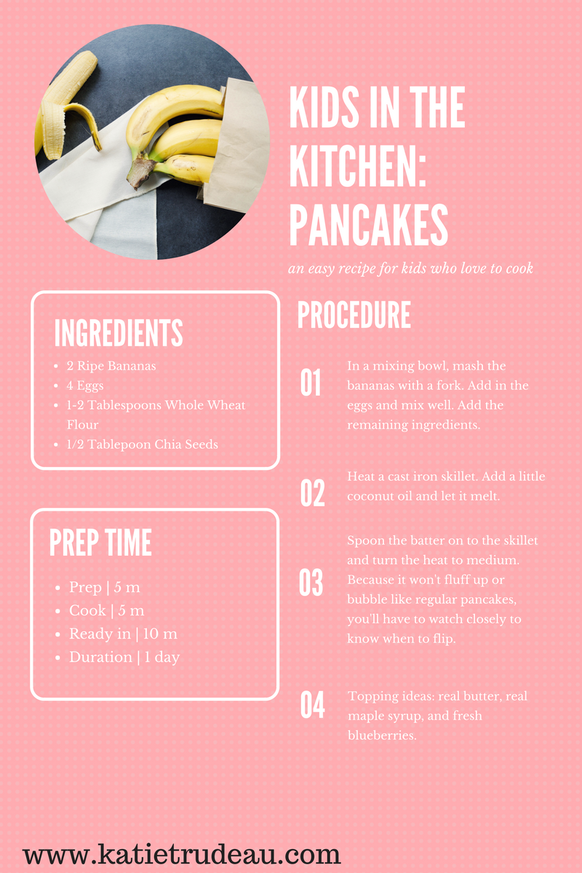 It's tempting to try to rush through meal prep in order to get food on the table. I get it. I know dinner (or lunch or breakfast) can be stressful. (Read this post for reducing meal time stress.) We all know that eating together is important but actually cooking together can be an opportunity for bonding too! If you can slow down (just a little bit) and invite your kids into the kitchen, you not only get a chance to chat, but you have a valuable teaching opportunity to impart your culinary and nutrition wisdom on your kids. The key is to start simple. Use a simple recipe and hand over the reigns. The recipe above is easy and even my littles can do almost the entire recipe without help. Tips for using cooking as a bonding tool
Easy banana pancakes recipe What you need:
 Do your kids help out in the kitchen? How do you use food and cooking as a bonding tool? What are your favorite recipes to cook with your kids? Comment below! This site contains affiliate links to products. We may receive a commission for purchases made through these links at no additional cost to you. We only suggest products we love and use.
0 Comments
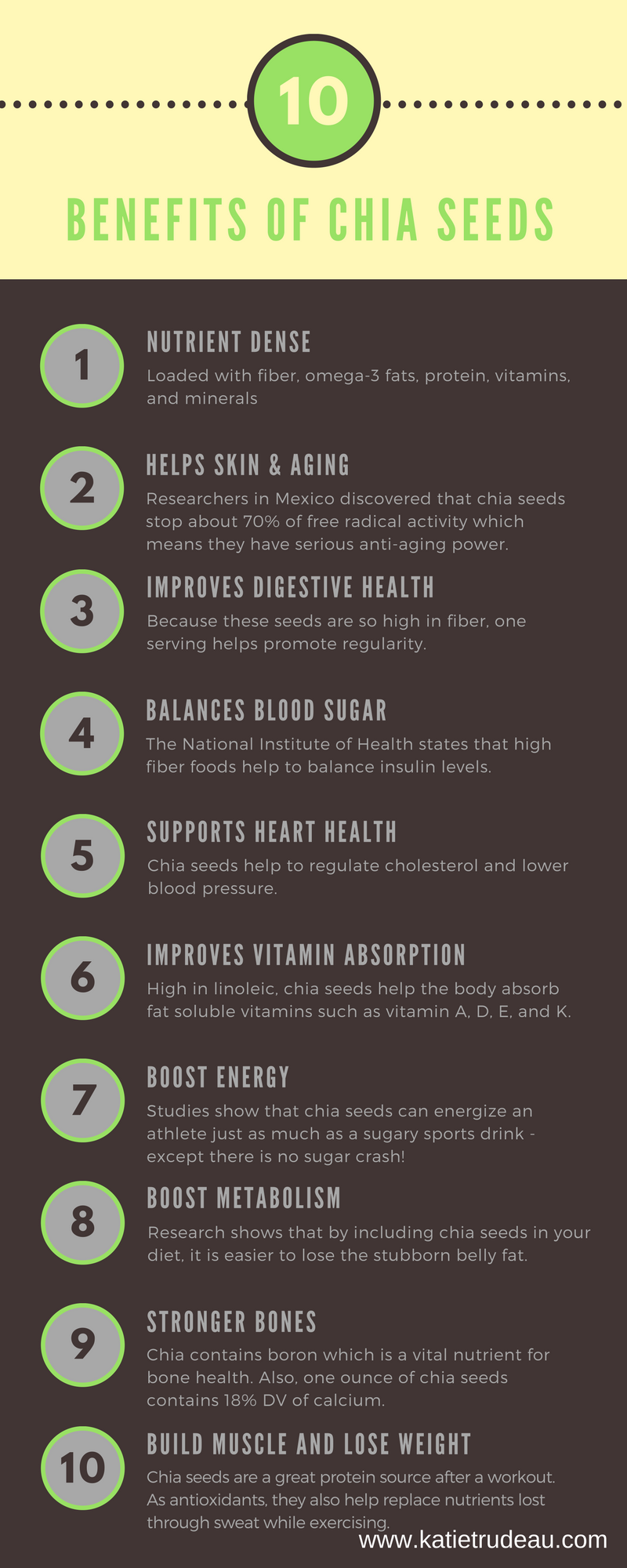 Chia seeds are one of my favorite seeds because they are ... dare I say... fun? I like to put them in juice and let it sit and watch them expand. I put a lot of chia seeds and end up with a sort of faux bubble tea drink. But apart from my bizarre love of their texture when they soak up a liquid, chia seeds are a superfood for a reason. Chia seeds are powerful antioxidants with the power to assist in weight loss, improve heart health, support insulin levels, strengthen bones, energize us, and boost metabolism. There really isn't a reason why you shouldn't be eating some of these each day! I made refrigerator oatmeal each night and chia seeds play a starring role in my recipe. Easy overnight oats recipeI say easy and I mean it. No measuring required for this recipe.
I have a cereal bowl that comes with a lid so I use that, but feel free to use whatever container you want.
Now the magic is to put all of those ingredients together and let it do it's thing. It's up to you how big or small you make your portion, but the key is to make sure you have enough milk so the seeds and oats can absorb it. If it's too low on milk, add a splash more. The cinnamon is beneficial for heart health but it also adds a kick of flavor to the oatmeal. It's easier to cut out sugar with the cinnamon, but if you need a little extra sweetness, opt for real maple syrup or coconut sugar. What is your favorite way to eat chia seeds? Comment below. 
Family dinners linked to improved diet and improved emotional health
Study after study reveals what our grandparents knew: the importance of family dinners. In fact, many studies reference family dinner attendance as a key factor in how happy a family is. A study from the University of Florida illustrated just exactly how a family dinner affects a family:
But... it's not always so easy
The research clearly shows just how beneficial family dinners are, but it's not always easy to gather around the table. Between hectic schedules, extracurricular activities, and the end-of-the-day meltdowns, dinner is often one of the loudest, craziest, exhausting, and emotionally draining times of the day. It seems that as soon as I declare that I am headed to the kitchen to make dinner, someone poops his diaper, someone else begins to whine that he's hungry, there's a small human clinging to my leg and begging to be held, and I just remembered that I didn't thaw the chicken yet. It's seems counterproductive to go through all the hassle only to end up grumpy and sweaty at the dinner table.
Tips for making it to the family dinner table (more often and with less stress)
Use these tips and you'll be sure to make it to the family table more often and with less stress.
1. Plan ahead If you know that you'll be getting home late, try a crock pot recipe. Set it up in the morning and you'll have dinner ready the minute you get home. 2. Use meal planning Not only does meal planning make your grocery shopping more efficient, but you'll save money too because if you have a plan, you're less likely to just throw stuff in the cart. When you know what you're making, dinner is less stressful. No more last minute wondering what to throw together. 3. Give small tasks to your littlest children Little ones can fetch milk from the fridge or beans from the pantry, stir a batter, open a new package of butter, or even set the table. All of these are easy for small children and helps them feel involved. 4. Give age-appropriate tasks to older children Once you've taught your child to properly use a knife, let them chop veggies. Not only will this help you get dinner on the table faster, but it gives you ample time to chat with your son or daughter about his/her day. 5. Choose recipes carefully A common dinner battle centers on the dish itself. If you know your children truly do not like Thai food, skip it. If you're not short on time, whip up an alternative for kids who don't like the spiciness. For instance, keep the sauce of a stir-fry and let each family member have the choice to ladle on the sauce or forgo it. 6. Clean up time Assign everyone one task for cleanup and the after-dinner cleaning will go by much quicker. You're more likely to eat together if the clean-up isn't a time-consuming task for one parent every night. 7. Prepare for picky eaters Fighting a picky eater is just a recipe for disaster. According to a study in the scientific journal Appetite, researchers continue to point out that picky eating is normal. In fact, up to 39% of kids are labled as "picky eaters" at some point in their childhood, although most pickiness starts to decline by age 6. So what to do until then? Try never to yell or fight about food; check out these tips for handing picky eating with respect. 8. Try a meal delivery program I get it -- meal planning, grocery shopping, and prepping can take a lot of time, and if you're short on time, dinner can start to feel stressful rather than peaceful. Meal subscription services can be a great way to take the stress out of dinner prep. Blue Apron is a meal subscription service that sends pre-portioned food ingredients and recipes so that you can have fresh and healthy home-cooked meals. Meal prep is now simplified and grocery shopping is done for you. Why Blue Apron? They only supplies the best ingredients, which is evidenced through their work with family-owned farms and artisanal purveyors. Your Blue Apron ingredients are:
Are you eating dinner as a family?
What is one way you make family dinners a priority? How do you get to the table without feeling stressed? Comment below!
**This post contains affiliate links. I will receive a small commission if you decide to subscribe to Blue Apron. However, this is my completely honest review and you’re by no means obligated to use my links. If you do thanks so much for supporting my site.
 If you read my previous post, then you already know that regular family dinners contribute to a family's overall happiness, physical health, and emotional health. But if you have small children, you probably are thinking "How can dinnertime be happy with a picky eater in the picture?" Picky eating is normal!Childhood picky eating is very normal! A study entitled "Food Rejections in Children: Cognitive and Social/Environmalen Factors Involved in Food Neophobia and Picky/Fussy Eating Behavior" illustrated justh ow common it is: nearly 39% of children aged 2-6 are picky or fussy eaters. The behavior usually starts around toddlerhood and begins to taper off by age 6. Even though this is a silver lining, 4+ years of picky eating can be draining. 7 Tips for handling picky eatingSince food is obviously necessary for ... um... living, it makes sense that a food battle would ensure. As a parent, it is your responsibility to make sure your child is well-nourished, but picky-eating definitely puts a wrench in that plan. Follow this tips for handling fussy eating with peace and respect:
Avoid yelling or forcing a child to finish his plate Because much of fussy eating stems from panic and fear (picky eating is sometimes referred to as "Food Neophobia" in the science world), yelling or forcing a child to sit until the plate is clean only increases feelings of panic and fear. The more panic a child feels, the more negative feelings s/he will associate with dinnertime. Include the nutrients where you can My son definitely falls under the picky-eater category. My main goal is make sure he gets the proper nutrients. He loves fruits, vegetables, and grains. He does not like any form of meat so protein is where I struggle. I rely a lot of eggs and peanut butter. I make shakes for him occasionally to make sure he has enough protein. The simplest recipe I use is this:
Stick to what works My son definitely can get into a rut with food, but as long as he is getting enough nutrients, I don't mind at all. Sticking to what I know he loves makes meals less of a battle. I know one day he'll be more adventurous, but for now, I'm just focusing on what he does enjoy. Rewards Rewards can be a very slippery slope. If you reward a child for doing X behavior, it can (but not always) escalate to the point where s/he won't do anything without a reward. However, for short-term use, rewards can be very effective. If you are thinking of using rewards for eating, be sure to never use food as a reward. Consider a sticker chart for just trying. Repeated Exposure Even though it gets tiring, always ask your child if they want to try a bite of X food. You will probably get a lot of "No thank you's" (I know I do!) but the key is to continue to expose your child to the new food. Eventually s/he will try it. Child experience food through social learning, which means that the more they see it, the more familiar it becomes, and the more likely it will be accepted. I love to add berries or bananas to my cereal and oatmeal but for years that has been a big fat No for my son. Instead of putting berries in his cereal, I slice them on a ramekin and let him eat them separate. One morning, much to my surprise, he dumped his berries in the cereal and happily ate it all. That may seem like small potatoes but for this Mama, that was a huge WIN! I was so proud of him; he did it all on his own without a battle. Now he loves his berries in his cereal, and he came to that conclusion all on his own. Presentation Presentation for new foods is key for my son. The way I present it both verbally and physically plays a big part in whether or not he'll try it. I bought him fun plates and silverware that look like construction vehicles to help make meals more fun. The way I describe food also helps. We call broccoli "baby trees". He loves broccoli but the very first time I introduced it, he was wary. A simple name change was all he needed to give it a try. No pressure The key to keeping the peace at the table is to remain pressure-free. Ask your child to try a food, but don't hound him. Remember that research shows that a child may need 10-15 tries of a food before he actually eats a serving. Dealing with a picky eater can be tiring and exhausting and can be a major source of dinnertime drama. Following these tips can definitely help bring more peace to your table. What have you done to help a picky eater in your family? Comment below! |
About KatieWife & Mama with a passion for peaceful parenting, natural living, homeschooling... and my daily café au lait. 
Archives
July 2020
Categories
All
|